In a busy family kitchen, the countertop takes more abuse than any other surface in the house. Juice spills at breakfast, homework and craft projects in the afternoon, hot pans and tomato sauce at dinner, and quick wipe-downs with whatever cleaner is closest. A countertop that looks perfect in a showroom has to survive all of that, every day, for years.
Quartzite and quartz are the two materials Chicago families ask us about most. Both are durable and beautiful, but they handle real family life differently. This guide skips the textbook comparison and focuses on what matters at home: spills, heat, kids, cleaning and everyday wear, so you can decide quartzite vs. quartz for a family kitchen with confidence.
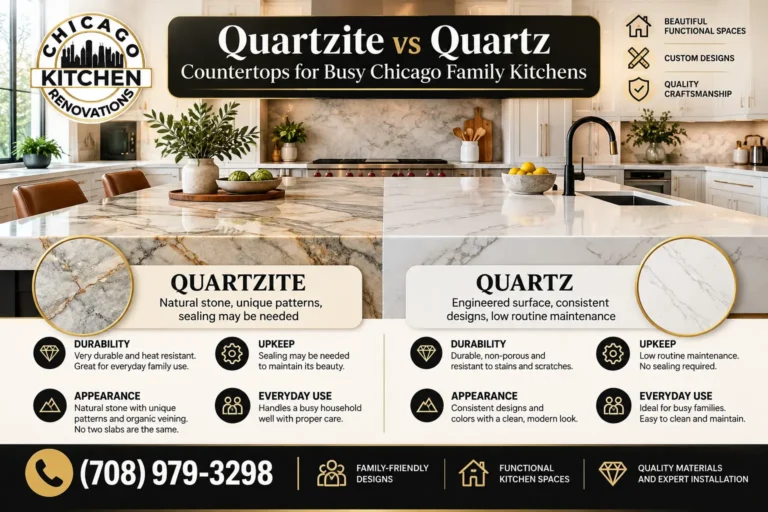
For most busy families, quartz is the easier choice. It is non-porous, never needs sealing and shrugs off juice, coffee, wine and marker with simple soap and water. Quartzite is the better choice if you want natural stone, cook often with hot pans and are comfortable sealing it periodically. Quartz is more sensitive to direct heat and harsh chemicals; quartzite is more sensitive to staining if it is not sealed. Choosing the right edge profile, finish and color matters almost as much as the material.
Want to see both side by side? Call (708) 979-3298 or book a consultation. For a full material comparison, read our main guide to quartzite vs. quartz countertops.
A Day in a Busy Family Kitchen: How Each Material Holds Up
The best way to compare these surfaces is to walk through an ordinary day.
| Time of Day | What Happens | Quartz | Quartzite |
|---|---|---|---|
| Breakfast | Orange juice, coffee and berry spills | Wipes clean; no staining | Wipes clean if sealed; wipe acidic spills promptly |
| School lunches | Knives, sandwich prep, crumbs | Scratch resistant; still use a cutting board | Very hard and scratch resistant; still use a cutting board |
| After school | Markers, glue, paint and homework | Easy to clean; non-porous surface resists ink | Usually cleans up if sealed; act quickly on ink and dyes |
| Dinner | Hot pans, oil, tomato sauce | Use trivets; resin can discolor from direct heat | Handles heat well; oil and sauce wipe off when sealed |
| Cleanup | Spray cleaner and quick wipe-down | Mild soap; avoid bleach and harsh abrasives | pH-neutral stone cleaner or mild soap |
| Weekend | Baking, parties and heavy use | Low maintenance and consistent look | Durable natural stone with unique character |
The Five Things That Matter Most for Families
1. Stain Resistance
Kids spill. Quartz is non-porous, so liquids sit on the surface and wipe away. Quartzite is a natural stone with some porosity, so it relies on a good sealer. When sealed and wiped promptly, quartzite resists most everyday stains, but it asks for a little more attention than quartz.
2. Heat
Busy cooks often set a hot pan down without thinking. Quartzite handles heat well because it is natural stone. Quartz contains resin binders, and very hot cookware placed directly on it can cause discoloration. If you cook a lot and do not want to rely on trivets, that points toward quartzite.
3. Chips and Edges
Most countertop damage in family kitchens happens at the edges, where pots, high chairs and toys bump into them. Both materials can chip if hit hard. A rounded or eased edge is far more forgiving than a sharp square edge, regardless of material.
4. Cleaning Routine
Quartz needs only mild soap and water. Avoid bleach, oven cleaner and abrasive pads. Quartzite also cleans with mild soap or a pH-neutral stone cleaner, plus periodic resealing. Ask your fabricator how often your specific slab should be sealed.
5. Hiding Everyday Mess
Busy kitchens are rarely spotless. Veined, speckled or mid-tone surfaces hide crumbs, water spots and fingerprints better than solid white or very dark polished surfaces.
Family-Friendly Choices Beyond the Material
| Decision | Family-Friendly Choice | Why It Helps |
|---|---|---|
| Edge profile | Eased, rounded or bullnose edge | Resists chips and is gentler on little heads and hands |
| Finish | Polished, or a quality honed finish | Polished surfaces are easiest to wipe; honed hides some smudges but can show oils |
| Color | Veined or mid-tone patterns | Hides crumbs, water spots and everyday wear |
| Island overhang | Properly supported seating overhang | Kids lean and climb; support prevents cracks |
| Seams | Placed away from the sink and main prep area | Keeps seams out of the busiest, wettest zones |
| Sink | Undermount sink | Crumbs and spills wipe straight into the sink |
The island is usually the hardest-working surface in a family kitchen. Plan seating, overhang support and storage together. See kitchen island customization and our waterfall island guide.
Which One Fits Your Family?
Choose Quartz If
- You have young children and want the lowest-maintenance surface.
- You want a consistent color and pattern across the whole kitchen.
- You are happy to use trivets for hot pans.
- You do not want to think about sealing.
Choose Quartzite If
- You want genuine natural stone with unique veining.
- You cook often and want strong heat resistance.
- You are comfortable with periodic sealing.
- You want a high-end look that still stands up to daily use.
Consider Using Both
Some families choose quartz for the busy perimeter counters near the sink and stove, and a statement quartzite slab for the island. This balances easy care where the mess happens with natural beauty where everyone gathers.
Test before you decide: Ask for a sample of the exact material and try it at home with coffee, lemon juice and cooking oil. Wipe it after a few minutes and see how it behaves. It is the quickest way to know how it will live with your family.
Cost Considerations for Families
Quartzite is generally priced higher than most quartz because it is a natural stone that is harder to cut and fabricate. Quartz pricing varies by brand, pattern and thickness, and premium marble-look quartz can approach natural stone prices. The total cost also depends on the size of your kitchen, edge profile, cutouts and how many slabs your layout needs.
For the bigger budget picture, read how much a kitchen remodel costs in Chicago and our kitchen cabinets and countertops guide.
Simple Care Rules for Each Material
| Care Rule | Quartz | Quartzite |
|---|---|---|
| Daily cleaning | Mild dish soap and warm water | Mild soap or pH-neutral stone cleaner |
| Hot pans | Always use a trivet | Trivet recommended, but handles heat well |
| Sealing | Never needed | Periodically, as advised by your fabricator |
| Avoid | Bleach, oven cleaner, abrasive pads | Harsh acidic or abrasive cleaners |
| Cutting | Use a cutting board | Use a cutting board to protect knives and finish |
See quartz and quartzite in person before you choose.
We help Chicago families pick countertops that look beautiful and stand up to real life.
Book a Free Consultation Call (708) 979-3298Explore Our Countertop Services
We serve families across Chicago and the southwest suburbs, including Orland Park, Oak Lawn, Mokena, New Lenox and Frankfort.
Frequently Asked Questions
Is quartz or quartzite better for a kitchen with kids?
Quartz is usually easier for families with young kids because it is non-porous and never needs sealing. Quartzite is also a strong choice for families who want natural stone and are comfortable with periodic sealing.
Will juice or wine stain quartzite?
A properly sealed quartzite resists most everyday stains if spills are wiped up promptly. Acidic spills and dark liquids should not be left to sit.
Can I put a hot pan on quartz?
It is best to use a trivet. Quartz contains resin, and direct contact with very hot cookware can cause discoloration.
Which edge profile is safest for children?
A rounded, eased or bullnose edge is gentler than a sharp square edge and also resists chipping better.
Which shows fingerprints and crumbs less?
Veined or mid-tone patterns hide everyday mess better than solid white or dark, highly polished surfaces, regardless of the material.
Can I use quartz and quartzite in the same kitchen?
Yes. Many families use quartz on the perimeter and a quartzite slab on the island for a balance of easy care and natural beauty.
What cleaners should I avoid?
Avoid bleach, oven cleaner and abrasive pads on quartz. On quartzite, avoid harsh acidic or abrasive cleaners and use mild soap or a pH-neutral stone cleaner.
Pick the Countertop That Fits Your Family
When it comes to quartzite vs. quartz for a family kitchen, the right answer depends on how you cook, how much maintenance you accept and the look you love. Quartz wins on easy care, quartzite wins on heat resistance and natural character, and the right edge, finish and color make either one work harder for your family.
Chicago Kitchen Renovations designs and installs kitchens across Chicago and the southwest suburbs. Call (708) 979-3298 to start planning.
