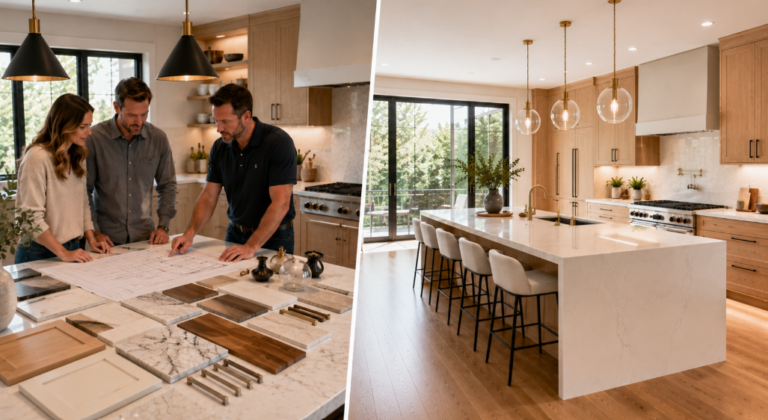
Some kitchen renovation decisions are easy to update over time, while others are expensive and disruptive to change once construction is complete. Your kitchen layout, cabinet design, countertop material, flooring, lighting plan, and storage solutions will influence how your kitchen looks and functions for decades. Taking time to make informed decisions before construction begins can help you avoid costly regrets later.
Key Takeaways
- Prioritize function before aesthetics.
- Permanent decisions deserve the most planning.
- Invest in quality for elements that are difficult to replace.
- Design for your lifestyle, not short-term trends.
- Think about how you’ll use your kitchen 10–20 years from now.
Why Some Kitchen Decisions Matter More Than Others
Every kitchen renovation includes dozens of decisions, from cabinet hardware to paint colors. While many of these choices can be updated in a weekend, others become part of your home’s structure and are far more difficult to change.
Replacing cabinet handles is simple.
Moving plumbing behind a wall isn’t.
Changing a backsplash is relatively affordable.
Replacing custom cabinetry or relocating an island often requires partial demolition.
One of the biggest mistakes homeowners make is spending weeks choosing paint colors while making major layout decisions in just a few minutes.
A successful kitchen renovation starts by identifying which choices will have the biggest impact on your daily life for years to come.
If you’re still planning your remodel, our Kitchen Renovation Services guide walks through every stage of creating a kitchen that’s both functional and built to last.
Decision #1: Your Kitchen Layout
More than any other decision, your kitchen layout determines how the space functions every day.
The location of your sink, refrigerator, cooktop, and prep space influences everything from cooking efficiency to family gatherings.
Changing the layout after a renovation often means relocating plumbing, electrical wiring, flooring, and cabinetry—all of which can become expensive.
Before deciding on a layout, think about:
- How many people cook at once
- Whether you entertain frequently
- Storage requirements
- Appliance locations
- Traffic flow through the kitchen
Contractor’s Tip: We’ve found that homeowners rarely regret investing extra time in planning the layout. Even the most beautiful kitchen can become frustrating if it doesn’t support the way your family actually lives.
Decision #2: Cabinet Design and Storage
Cabinets aren’t simply decorative.
They determine how efficiently your kitchen functions every single day.
Instead of focusing only on door styles, think about how you’ll organize everyday items.
Consider features such as:
- Deep drawers for pots and pans
- Pull-out pantry storage
- Soft-close drawers
- Spice organizers
- Corner storage solutions
- Hidden recycling bins
These upgrades often make a much bigger difference than decorative details.
Quality cabinetry also represents one of the largest investments in a kitchen renovation, making it worth careful planning.
Decision #3: Countertop Material
Countertops experience daily wear from cooking, cleaning, hot cookware, and food preparation.
While appearance is important, maintenance requirements should also influence your decision.
Ask yourself:
- Do you want natural stone?
- Are you comfortable sealing countertops?
- Do you cook every day?
- Do you have young children?
- How important is stain resistance?
Materials like quartz, granite, and quartzite each offer different advantages depending on your lifestyle.
Choosing the right countertop now can prevent years of unnecessary maintenance or future replacement costs.
Decision #4: Cabinet Height
One question homeowners frequently ask is whether cabinets should stop below the ceiling or extend all the way up.
Floor-to-ceiling cabinets provide:
- More storage
- Cleaner appearance
- Less dust collection
- Greater visual impact
Standard-height cabinets may reduce costs while creating room for decorative accents.
The best choice depends on your ceiling height, storage needs, and overall kitchen style.
Contractor’s Tip: In many homes, extending cabinets to the ceiling creates a more custom, built-in appearance while adding valuable storage that’s often overlooked.
Decision #5: Kitchen Lighting
Lighting is often underestimated during the planning stage.
Many homeowners assume ceiling lights alone will be enough.
In reality, a functional kitchen benefits from multiple layers of lighting.
These typically include:
- Ambient lighting
- Task lighting
- Under-cabinet lighting
- Pendant lighting
- Accent lighting
A thoughtful lighting plan improves both functionality and atmosphere.
Unlike replacing light fixtures, adding electrical wiring after construction is considerably more complicated.
Planning your lighting before construction begins gives you greater flexibility and often reduces costs.
Decision #6: Your Flooring Choice
Kitchen flooring has to do much more than look good. It needs to withstand spills, dropped cookware, heavy foot traffic, pets, and years of daily use.
Many homeowners focus on color or style first, but performance should be just as important.
Ask yourself:
- Will children or pets be using the kitchen?
- Do you cook frequently?
- How much maintenance are you comfortable with?
- Do you want waterproof flooring?
- Is long-term durability your priority?
Materials like hardwood, luxury vinyl plank (LVP), tile, and engineered wood each have their advantages.
Contractor’s Tip: Flooring is one of the most difficult finishes to replace because cabinets, appliances, and islands are often installed on top of it. It’s worth investing in a material you’ll still love years from now.
Decision #7: Your Kitchen Island
Kitchen islands have become one of the most requested renovation features—but bigger isn’t always better.
An oversized island can make the kitchen feel crowded, while one that’s too small may not provide enough workspace or seating.
Before deciding on an island, think about:
- Walkway clearance
- Seating requirements
- Storage needs
- Electrical outlets
- Sink or cooktop placement
- Future entertaining
A well-designed island should improve movement throughout the kitchen rather than interrupt it.
Sometimes a smaller island—or even a peninsula—is the better choice depending on the available space.
Decision #8: Appliance Placement
Appliances are expensive, but where they’re placed matters just as much as the models you choose.
A beautiful kitchen can become frustrating if appliances interfere with each other or disrupt the workflow.
Questions worth asking include:
- Can the dishwasher open without blocking walkways?
- Is the refrigerator easy to access while someone is cooking?
- Does the oven door interfere with nearby cabinets?
- Is there enough landing space beside the cooktop and refrigerator?
These details may seem minor during planning but have a noticeable impact on how comfortable your kitchen feels every day.
Contractor’s Tip: We encourage homeowners to imagine preparing an entire meal in their new kitchen before construction begins. Walking through the process often reveals layout improvements that aren’t obvious on a floor plan.
Decision #9: Your Sink and Faucet
The kitchen sink is one of the hardest-working features in any home.
Whether you’re washing vegetables, cleaning cookware, or filling large pots, your sink should support the way you use your kitchen.
Popular considerations include:
- Single bowl vs. double bowl
- Undermount vs. top-mount
- Stainless steel vs. composite materials
- Pull-down vs. pull-out faucets
- Touchless faucet technology
Rather than choosing what’s trending, think about what will make everyday tasks easier.
A busy family may prioritize a large single-bowl sink, while someone who frequently hand-washes dishes may prefer a double-bowl design.
Decision #10: Trends vs. Timeless Design
Every year brings new kitchen trends.
Last year it was bold colors.
This year it’s fluted wood, integrated appliances, and dramatic stone backsplashes.
While trends can provide inspiration, permanent elements should be chosen carefully.
Ask yourself one simple question:
Will I still love this in 15 years?
If the answer is uncertain, consider incorporating trends through elements that are easier to replace, such as:
- Paint
- Hardware
- Bar stools
- Decorative lighting
- Accessories
Keep your long-term investments—cabinets, countertops, flooring, and layout—more timeless.
Decisions That Are Easy to Change vs. Expensive to Change
Not every renovation decision carries the same long-term impact.
Here’s a simple guide to help prioritize your planning.
| Easy to Change Later | Expensive to Change Later |
|---|---|
| Paint color | Kitchen layout |
| Cabinet hardware | Cabinet installation |
| Light fixtures | Plumbing locations |
| Bar stools | Electrical wiring |
| Backsplash | Flooring beneath cabinets |
| Window treatments | Kitchen island size |
| Decorative accessories | Countertop replacement |
When making design decisions, spend the most time on the items in the second column. Those choices are much harder—and often much more expensive—to change after the renovation is complete.
The Kitchen Renovation Regrets We Hear Most Often
Over the years, homeowners often share the same frustrations after a renovation.
Some of the most common include:
Not Adding Enough Storage
Beautiful kitchens can quickly become cluttered if storage isn’t carefully planned.
Choosing Style Over Function
A trendy design may look great initially but become impractical for everyday living.
Underestimating Lighting
Many homeowners wish they had included under-cabinet lighting or additional task lighting.
Installing Too Few Electrical Outlets
Modern kitchens require power for far more appliances than they did a decade ago.
Prioritizing Budget Over Quality
Saving money on permanent materials can sometimes lead to earlier repairs or replacements.
Contractor’s Insight: One of the biggest differences between a good kitchen and a great one isn’t the price—it’s thoughtful planning. Taking extra time before construction begins often prevents the regrets homeowners experience after the project is finished.
A Simple Decision Framework Before You Finalize Your Design
Before approving your renovation plans, ask yourself these five questions for every major decision.
- Will this still suit my lifestyle in 10–20 years?
- Is this material easy to maintain?
- Will this improve how my family uses the kitchen every day?
- Is this difficult or expensive to replace later?
- Am I choosing this because it’s practical—or simply because it’s trendy?
If you can confidently answer these questions, you’re much more likely to be happy with your renovation for years to come.
What We’d Recommend
If your budget is limited, invest first in the decisions that are hardest to change later—your layout, cabinetry, flooring, and lighting plan. Decorative elements like paint colors, hardware, and accessories can always evolve over time, but getting the foundation right is what creates a kitchen you’ll enjoy for decades.
A successful kitchen renovation isn’t defined by the latest trends—it’s built on thoughtful decisions that continue to work long after the project is complete.
While finishes and colors can always be updated, your layout, cabinetry, flooring, and storage solutions will shape how your kitchen functions every single day. Investing time in these choices now can save money, reduce future renovations, and create a space that truly fits your lifestyle.
If you’re planning a remodel, our Kitchen Renovation Services are designed to help homeowners make informed decisions from the earliest planning stages through final installation. Whether you’re exploring ideas or ready to begin, contact our team to discuss your project and learn how we can help create a kitchen that’s beautiful, functional, and built to last.
Also read: How to choose the best kitchen renovation contractor
How to Choose the best materials for your kitchen renovation
